

Our 120-hectare farm has been certified organic since 2011 and obtained B Corp certification in 2025. Here, we practice regenerative agriculture that aims to restore soil health and promote biodiversity. Our organic vegetable cultivation covers 1 hectare.
The challenges of autumn weather
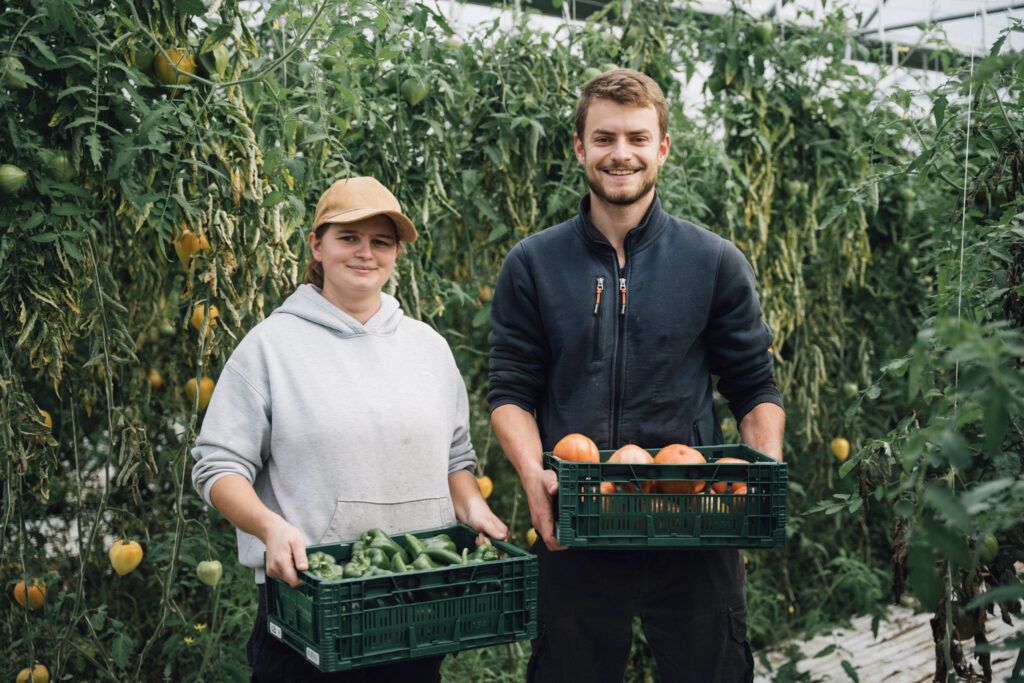
The arrival of autumn represents an important milestone for our market gardening at the Domaine. The main challenge during this time of year is the rise in humidity, which facilitates the appearance of diseases, particularly fungi on summer crops. It is therefore essential to monitor the plants to prevent diseases from spreading.
Conventional farms may use pesticides to manage disease. These chemicals can decrease the beneficial fungi and microorganisms in the soil. The agroecological practices we use at Domaine de Graux build healthy soils and soil microbiomes which support disease resistance in our crops. We also naturally disrupt pest cycles by planting diverse rotations with disease-resistant varieties.
Making space for winter crops
In autumn, we begin growing seasonal leafy vegetables: lettuce, purslane, lamb’s lettuce, and watercress. We also harvest storage vegetables such as sweet potatoes and beets, which must be harvested well in advance: last fall’s experience taught us that it’s best to harvest sweet potatoes earlier to avoid damage caused by rodents, which are very active at this time of year!
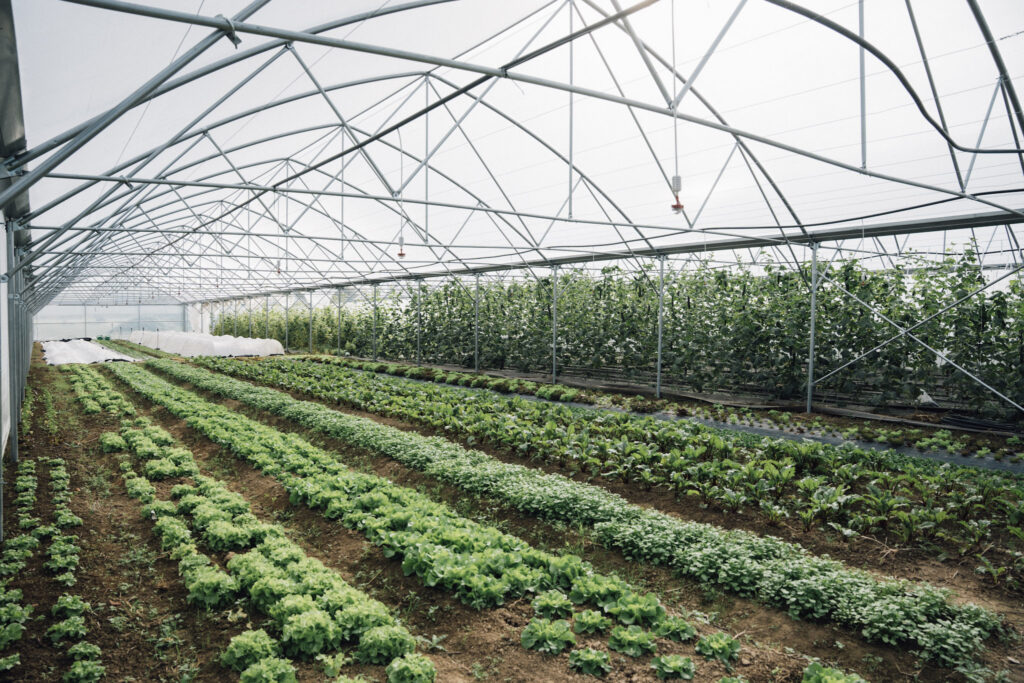
Autumn is also the season for greenhouse planting, which prepares winter crops by gradually replacing summer ones. This change of season requires special vigilance to cope with changing weather conditions.

Soil preparation
To prepare the soil, an effective technique is to cover it with tarps, which we reuse year after year. This method greatly facilitates spring cleanup, simplifying the removal of residues and making the land ready for new plantings. Tarps help retain soil moisture and nutrients over winter, and reduce weed pressure in early spring, preventing the need for tillage, which can damage soil health.
Where can you find our delicious vegetables? We collaborate with several stakeholders committed to organic, local, and sustainable agriculture, such as Interbio, Biofresh, the Tournai food cooperative, and the Rigaudière farm near the estate.
Reference:
Altieri, M. A., Nicholls, C. I., Dinelli, G., & Negri, L. (2024). Towards an agroecological approach to crop health: reducing pest incidence through synergies between plant diversity and soil microbial ecology. Npj Sustainable Agriculture, 2(1). https://doi.org/10.1038/s44264-024-00016-2
Duley, G., & Boselli, E. (2022). Mutual plant-fungi symbiosis compromised by fungicide use. Communications Biology, 5(1). https://doi.org/10.1038/s42003-022-04029-w