

Beyond the market garden and orchards, our arable crops have their own story of adaptation to tell this summer, caught between a temperamental pea harvest and a strong comeback from rapeseed.
Peas : a closely watched regenerative organic crop
This year, Emilien, our head grower, took on pea cultivation with the Contigo variety. With the intense heat, the results unfortunately fell short of expectations.
Peas are harvested at a very precise moment, measured by tenderometry, which assesses the firmness of the peas: the best window falls between 65 and 75 days after the April sowing, for a harvest in mid-July. Picked too early, the peas haven’t fully formed; picked too late, they harden like stones.
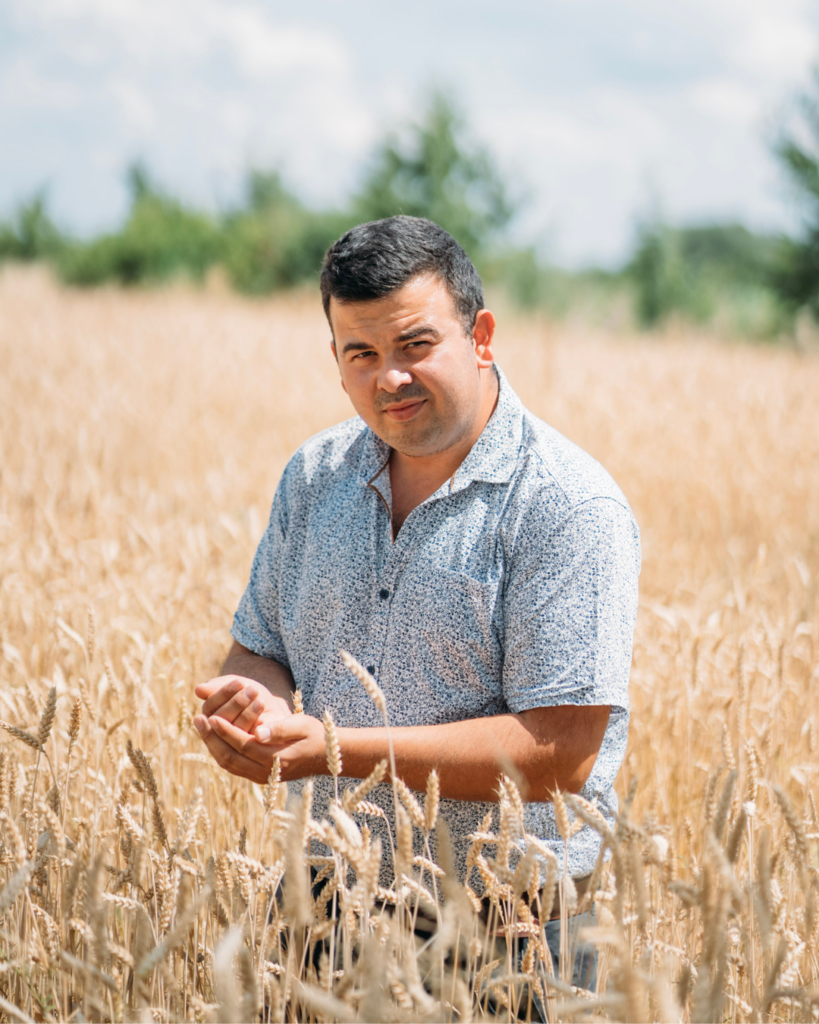
This summer, the heat cut pea yields in half (2.29T/ha), with 25 to 50% of flowers aborting per plant. This same heat stress also triggered flowering in weeds already present, encouraging them to spread. Peas have only a 10-day flowering window, and this summer’s heatwave landed right in the middle of it. The heat also favoured chamomile, an unassuming but formidable weed that made weeding more difficult.
A demanding crop, peas require three months of close attention: sowing, watching for pigeons and weeds, two passes with a tine weeder, then hoeing. Despite a difficult season, peas remain an excellent entry crop ahead of winter wheat: by capturing nitrogen from the air through the bacteria in their roots, they leave a nitrogen surplus in the soil, which the following wheat crop draws on to develop a grain richer in protein, and therefore a higher-quality flour.
Rapeseed at the Domaine: a crop in full revival
Rapeseed has been grown at the Domaine since 2018, with a few interruptions due to a sluggish market and pigeon damage. This year, we chose to plant it again: the market has turned favourable once more, and rapeseed remains an excellent entry crop, fitting in after oats and barley and ahead of wheat or spelt.
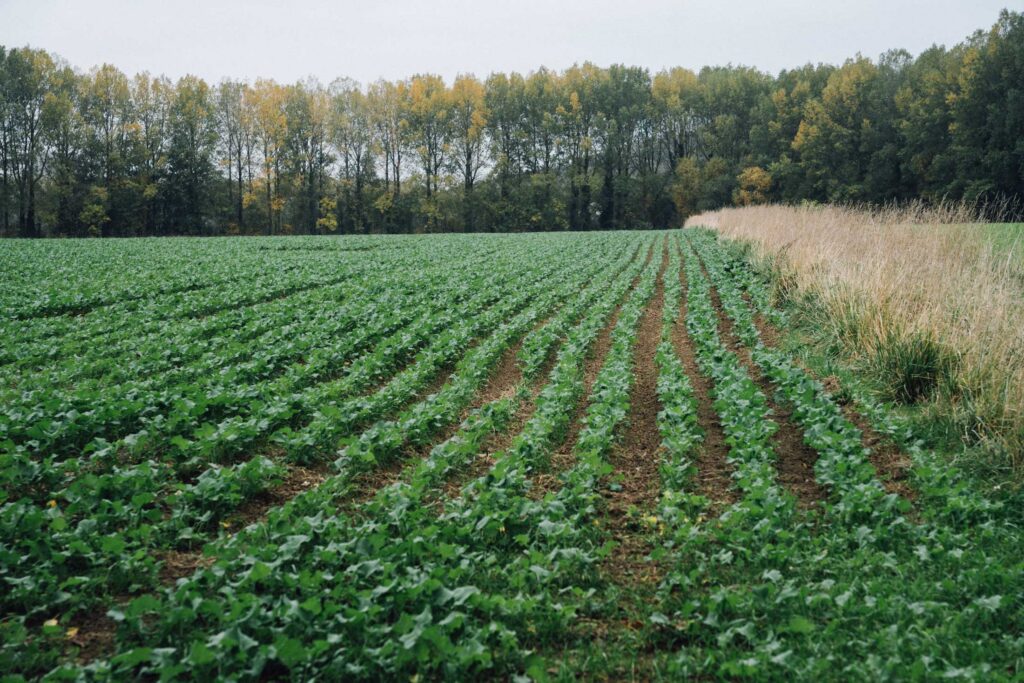

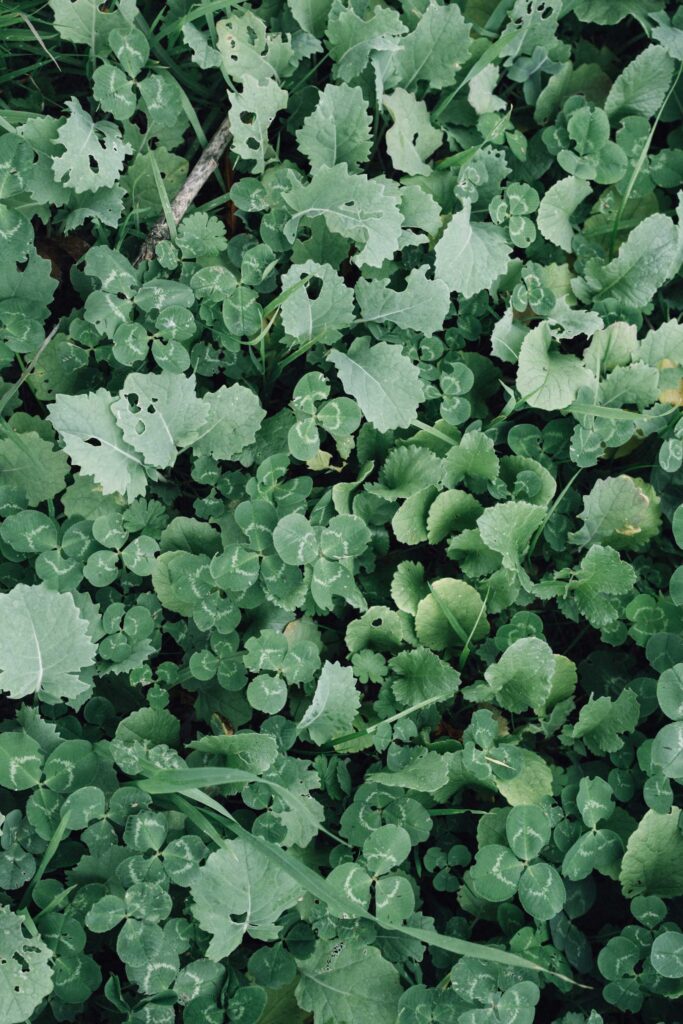
Rapeseed has a very long growing cycle: sown in August, it isn’t harvested until the following summer, in July. This makes it a crop that makes particularly good use of organic matter applied in summer, such as composted manure, slurry and digestate. It all starts with sowing in the height of summer, with the challenge of getting tiny seeds to germinate in often very dry soil. As winter ends, growth resumes, and extra vigilance is needed against pigeons and pollen beetles. Once past that stage, with flowering from spring onward, the crop quietly continues its cycle.

Pollen beetles are drawn to rapeseed’s flower buds before they open. They feed on the pollen inside and bore into buds that are still closed to lay their eggs, which can cause the buds to abort before flowering even begins.


New this season: the use of a precision seeder with 45 cm row spacing, which made it possible to hoe the crop twice in September. The goal for 2027 is to resow rapeseed with 75 cm spacing, so that hoeing can also be done in spring.
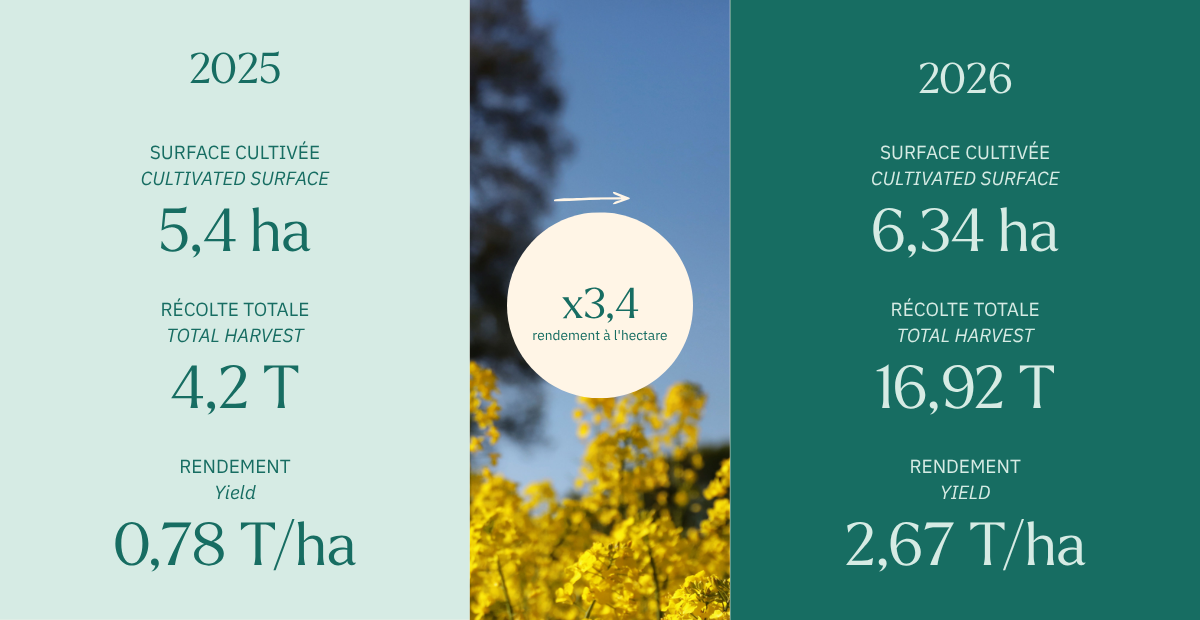
We like to share our challenges as well as our successes. The rapeseed harvest doubled between 2025 and 2026, thanks to the new hoeing technique and a spring application of pelleted fertiliser. The rapeseed was harvested on 8 and 9 July, earlier than usual, with the stems changing colour from green to brown signalling that the pods had matured. Recent weather conditions also helped bring
Building resilience beyond the field
While our own fields tell part of the story, they remain just one piece of a much bigger picture. To better understand how this summer’s extreme temperatures are reshaping agriculture at the regional level, we spoke with Blaise Duthoit, an independent agronomist working with Farm For Good and member of our Domaine de Graux’s Research & Innovation Committee.
Investing in soil health today is also investing in tomorrow’s climate resilience.
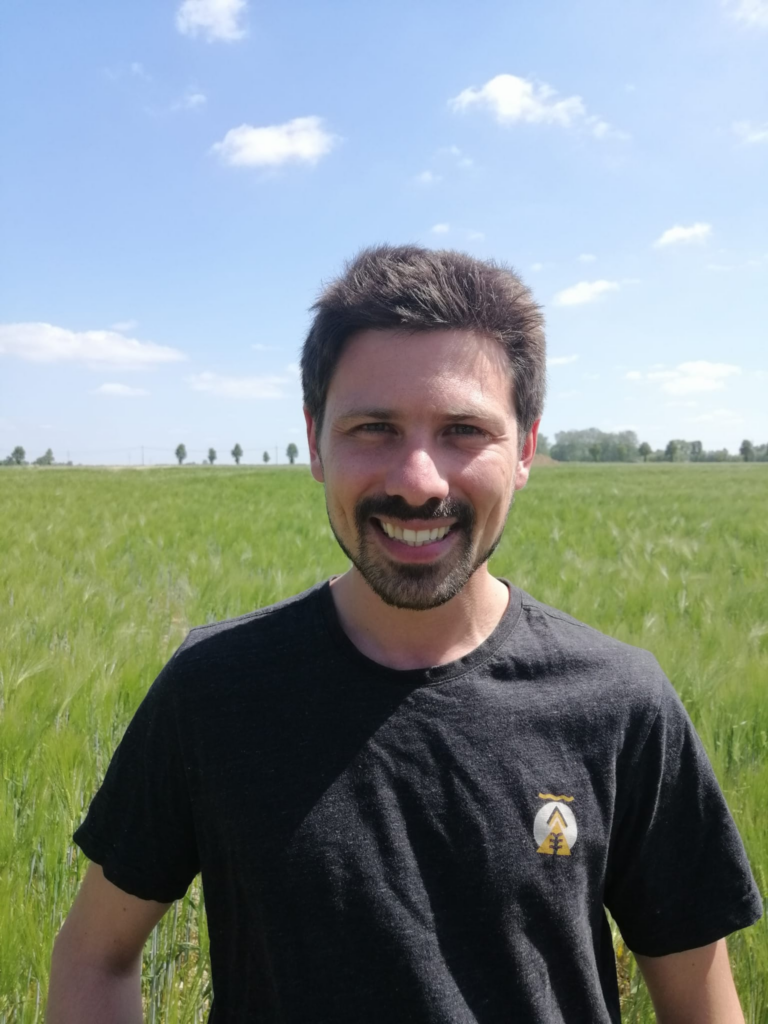
As heatwaves become an increasingly familiar part of the growing season, we wanted to know what he’s observing beyond Domaine de Graux. Are crop losses becoming widespread? And are farms that have adopted regenerative agriculture proving more resilience than those relying on conventional practices?
His answer is cautiously reassuring, though not without nuance. Overall, yields still seem to be holding up, he says, even if the average shows a slight downward trend. The real difficulty lies in increasingly unpredictable extremes. When a heatwave hits at the wrong moment, coinciding with a critical stage such as germination or flowering, the crop can fail entirely. And it isn’t always yield that suffers most; sometimes it’s harvest quality, to the point where a farmer can lose their market outlet altogether.
When it comes to regenerative agriculture, however, the difference is tangible, and Blaise doesn’t need to look far to prove it. Try driving a spade into bare soil after a cereal harvest, he says, and the handle will break before the ground gives way. On covered soil, whether pasture, alfalfa, or a spring crop, the shade from plants keeps the soil cooler and limits evaporation. Reduced tillage has a similar effect: crop residue left on the surface protects the topsoil, while hedgerows cut down on drying winds. Healthy soils, built up over time through organic matter and biodiversity, ultimately develop a greater “sponge capacity”: a better ability to retain moisture in hot, dry weather, and to absorb and drain water more efficiently during heavy rains. In other words, investing in soil health today is also investing in tomorrow’s climate resilience.
Yet resilience in the field doesn’t always translate into resilience on the balance sheet.
We also asked Blaise how farmers cope financially when harvests fall short of expectations due to increasingly unpredictable weather. Can flexible contracts, diversified outlets, or insurance mechanisms help absorb some of that risk?
For now, the answer remains complicated. Most farmers have very limited negotiating power with their buyers. Prices are generally either dictated by market conditions or fixed well before harvest, leaving little room to account for a season marked by extreme conditions. A widespread shortage can sometimes drive prices up, but these market fluctuations are entirely beyond the control of individual farms. In Wallonia, a safety net does exist: the agricultural disaster fund, which can be triggered based on an official assessment, and Blaise expects it to be activated this year. He acknowledges frankly, however, that this fund rarely covers a significant share of the investment needed to establish and maintain a crop.
For small regenerative farms, this remains one of the biggest unresolved challenges. Blaise does, however, see encouraging signs. With growing demand for crops like mustard, sunflower, and malting barley, new supply chains such as Farm For Good* are emerging, fostering closer collaboration between producers, processors, and buyers — shorter, more transparent chains by nature. Over time, these relationships could pave the way for fairer partnerships, recognizing both the value of regenerative agriculture and the shared responsibility of facing an increasingly uncertain climate.
*Farm For Good brings together farmers transitioning to certified organic regenerative agriculture. The association offers agronomic support, the strength of a network, partnerships with research centres, and profitable outlets through its cooperative. This year, wheat and oats are being grown at the Domaine de Graux for Farm For Good.