Summer is in full swing at Domaine de Graux, and for our breeder Astrid, the work never stops. New calves have been born, and every detail of pasture management requires special attention as the herd adapts to the intense heat.
Keeping the herd cool
Astrid, our breeder, tries to be as prepared as possible for the unpredictable summer months, looking after the herd of cows, our donkeys, and our pigs alike. With the intense heat, vigilance in the prairies only grows: water needs to be available at all times, and fences require particular attention. Rotational grazing rounds things out, keeping good grass on offer for the herd.
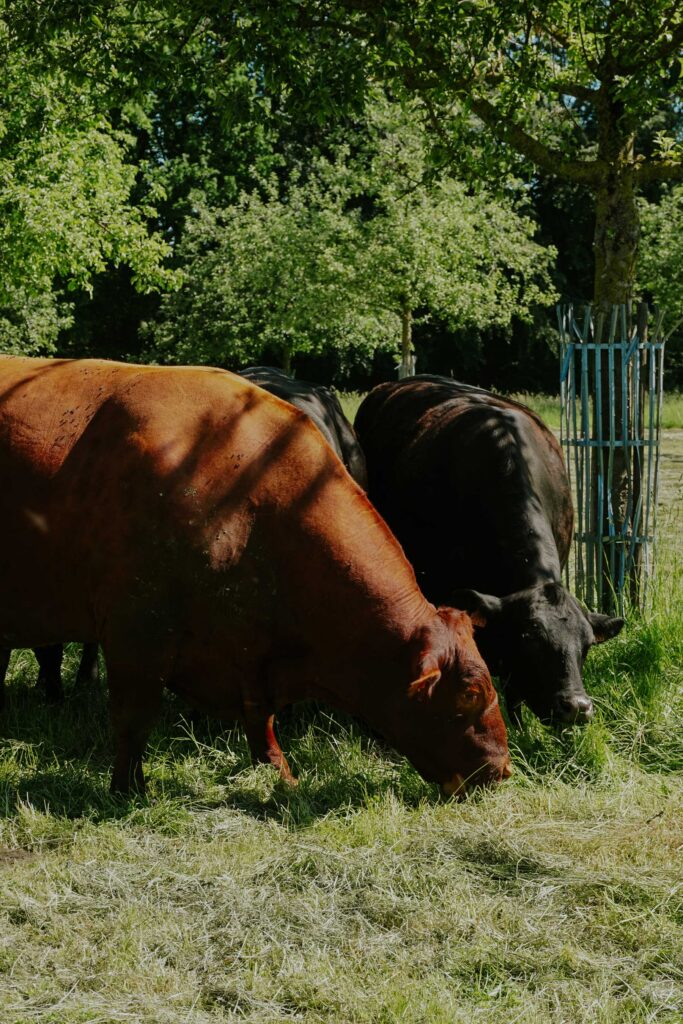
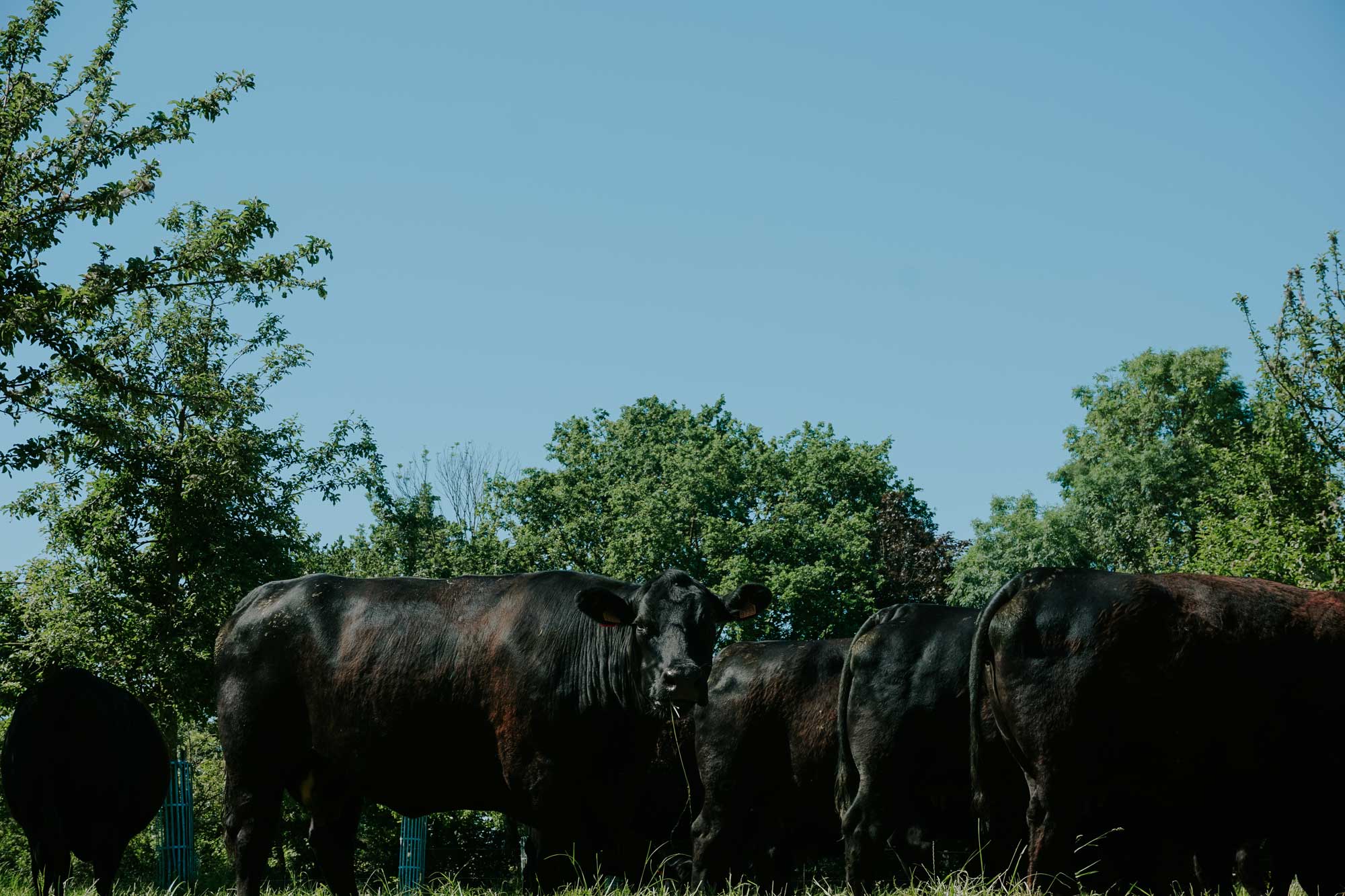
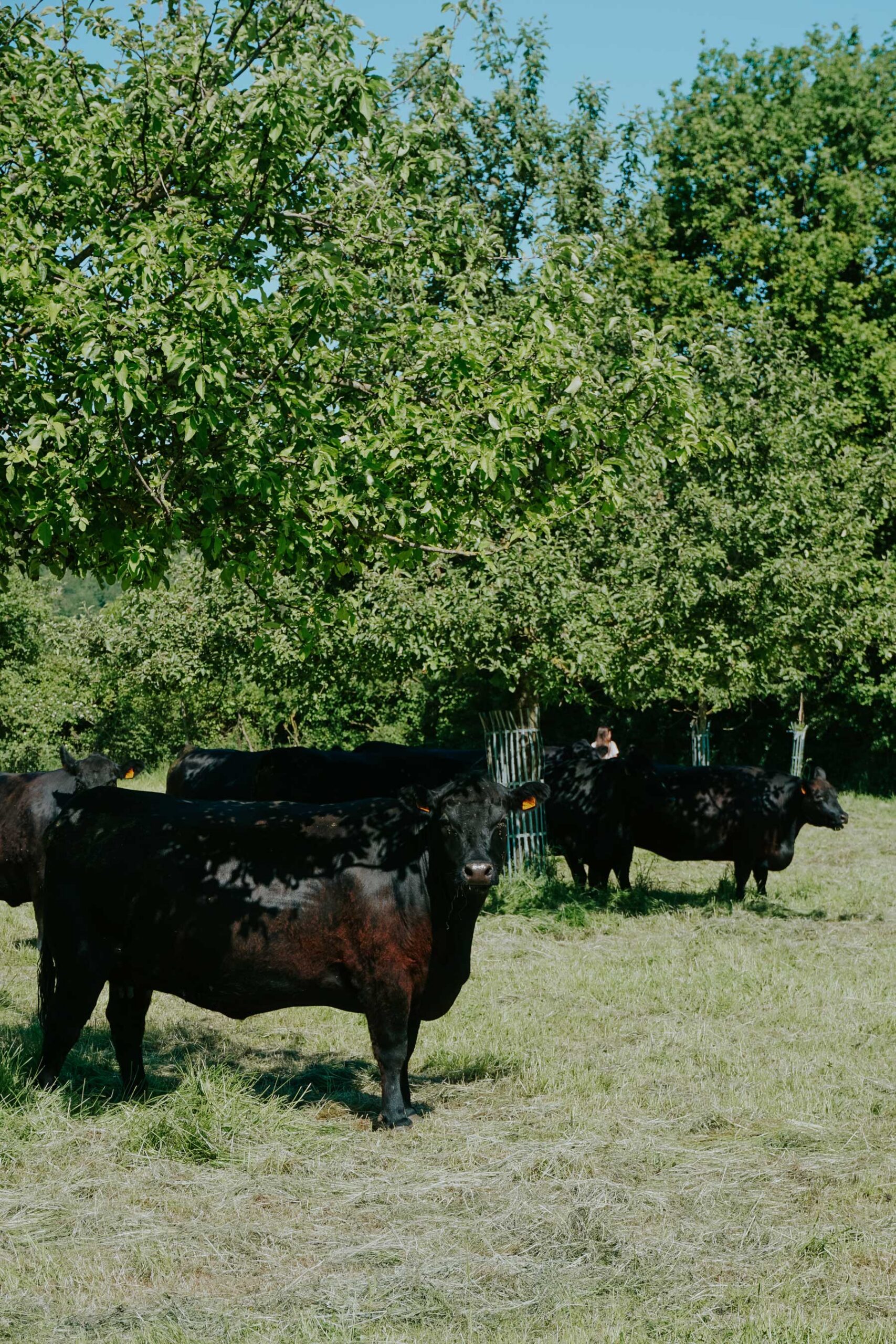
At the Domaine, everything is designed so that each animal can protect itself naturally from the heat and sun. Our orchard-meadows provide coolness and shade for the cows, in addition to freely accessible shelters. The animals can come and go at their own pace, according to their needs.
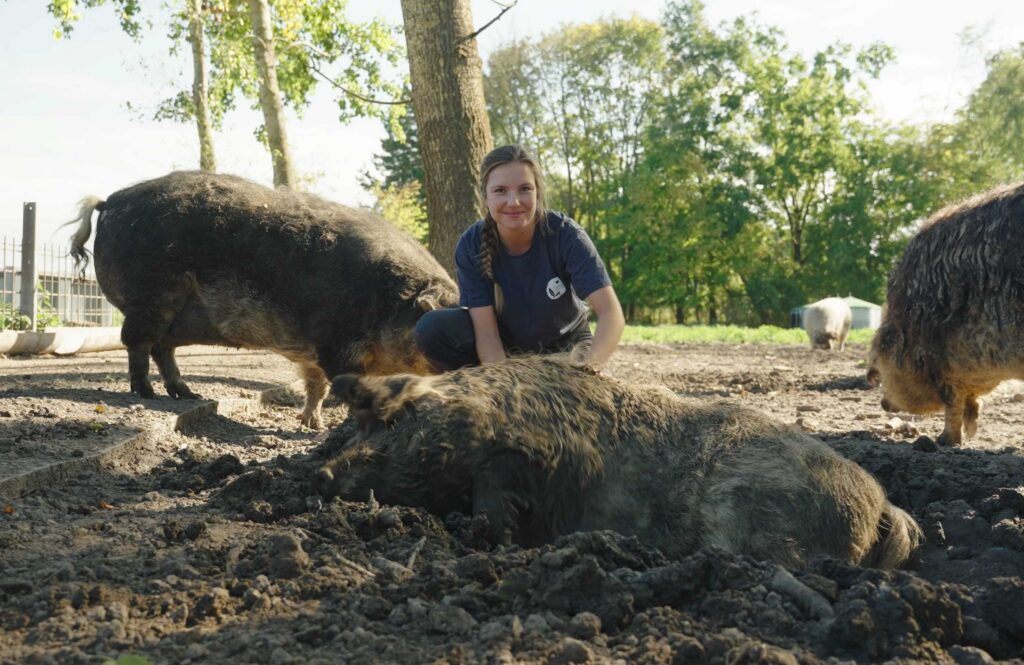
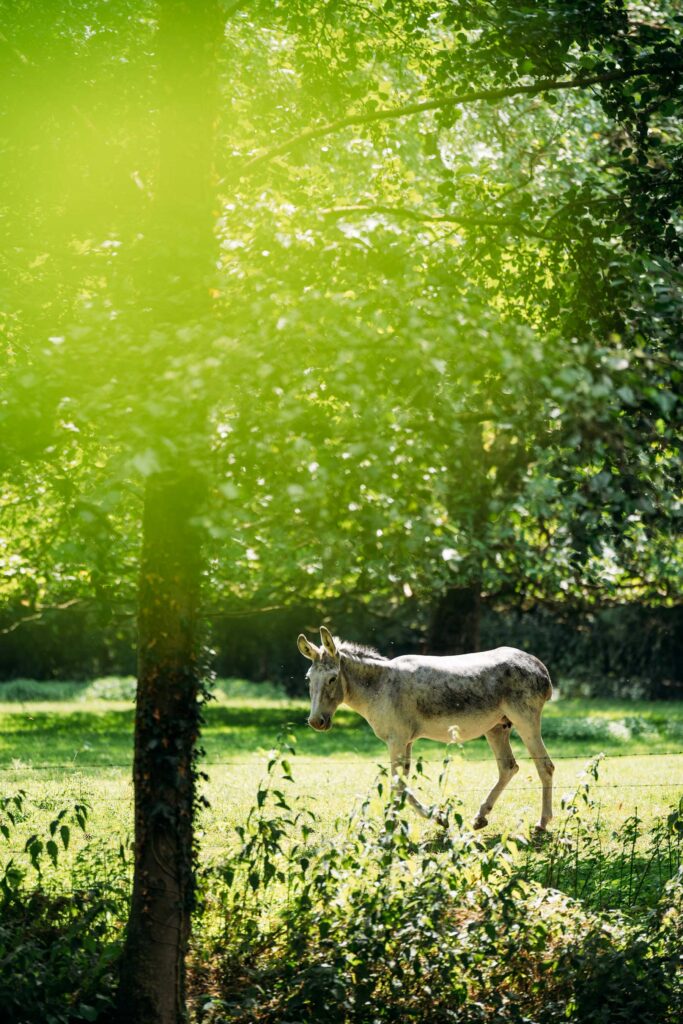
Our pigs have access to a cool, wooded area suited to their needs, ideal for wallowing and regulating body temperature, an essential behavior for a species that does not sweat. Automatic water troughs are set up throughout the Domaine, guaranteeing constant access to water, along with blocks of fresh water refilled regularly. A good shower helps cool the donkeys down, along with fly masks to keep the flies at bay. And Sully, the Domaine’s mascot, never hesitates to take a dip in the pond!
Altogether, the animals demand a great deal of attention out in the pasture during this period, with every detail checked and monitored closely.
Welcoming new life
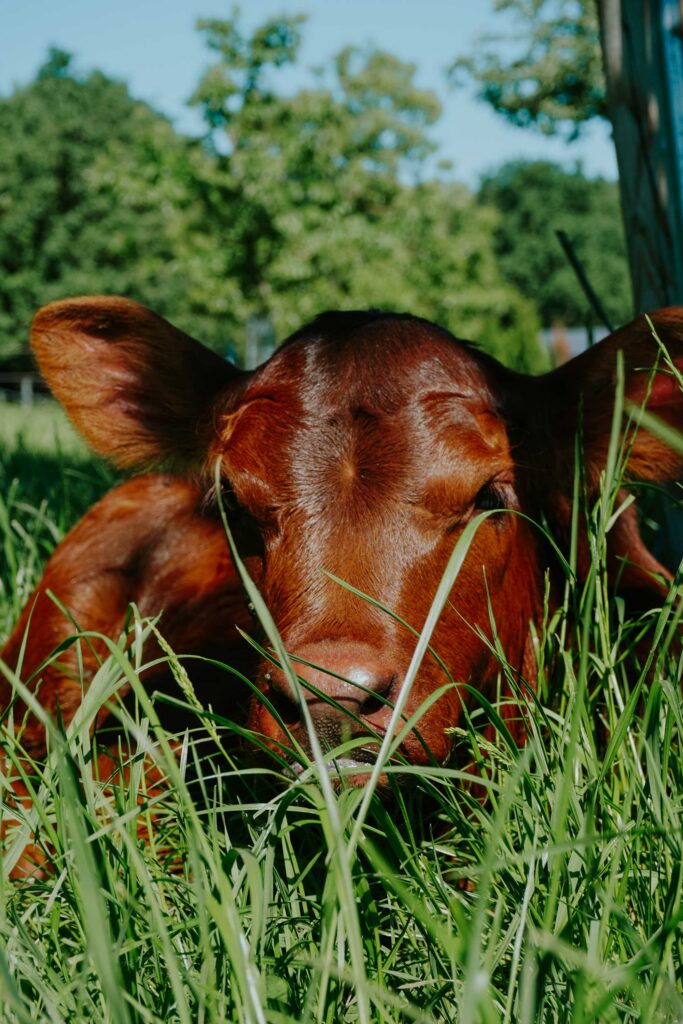
A big change this summer: with the arrival of the first calves sired by our Red Angus bull—who arrived last year—new blood is being introduced into our herd. Although less well-known than Black Angus, Red Angus share the same characteristics but have a magnificent red coat that is better suited to withstanding the heat.
During calving, Astrid moves the expectant mothers to the shelters so they have free access to a quiet space, away from the rest of the herd. Nothing is left to chance: everything relies on careful observation of the pregnant cows, both physiological and behavioural, to assess how the calving is progressing. Angus cows generally calve more easily, as their calves tend to be smaller than those of other breeds, which sometimes require a caesarean section every year. Complications can nevertheless always arise during calving. Observation therefore remains the first step, before any intervention, whether it is something Astrid can manage herself or simply requires an extra pair of hands. Our veterinarian is never far away should the situation become more complicated.