As summer progresses, our orchards move into full harvest mode. Behind every plum and apple lies a delicate balance of tradition, variety, and weather.
Know-How Across the Seasons
Every year, the fruit harvested in our orchards is picked or gathered according to its intended use. Since last year, we have been working in partnership with the Reinette & Co cooperative, which sells our apples and pears as table fruit. We also process our fruit into jam (with Le Bois d’Ogy), juice, and cider, in order to preserve their flavor at peak ripeness and enjoy them in the months ahead. We recently obtained the Vergers Vivants label, which certifies that our fruit comes from tall-stemmed trees grown without any synthetic treatments, relying instead on a diverse ecosystem, robust varieties, and rich biodiversity.
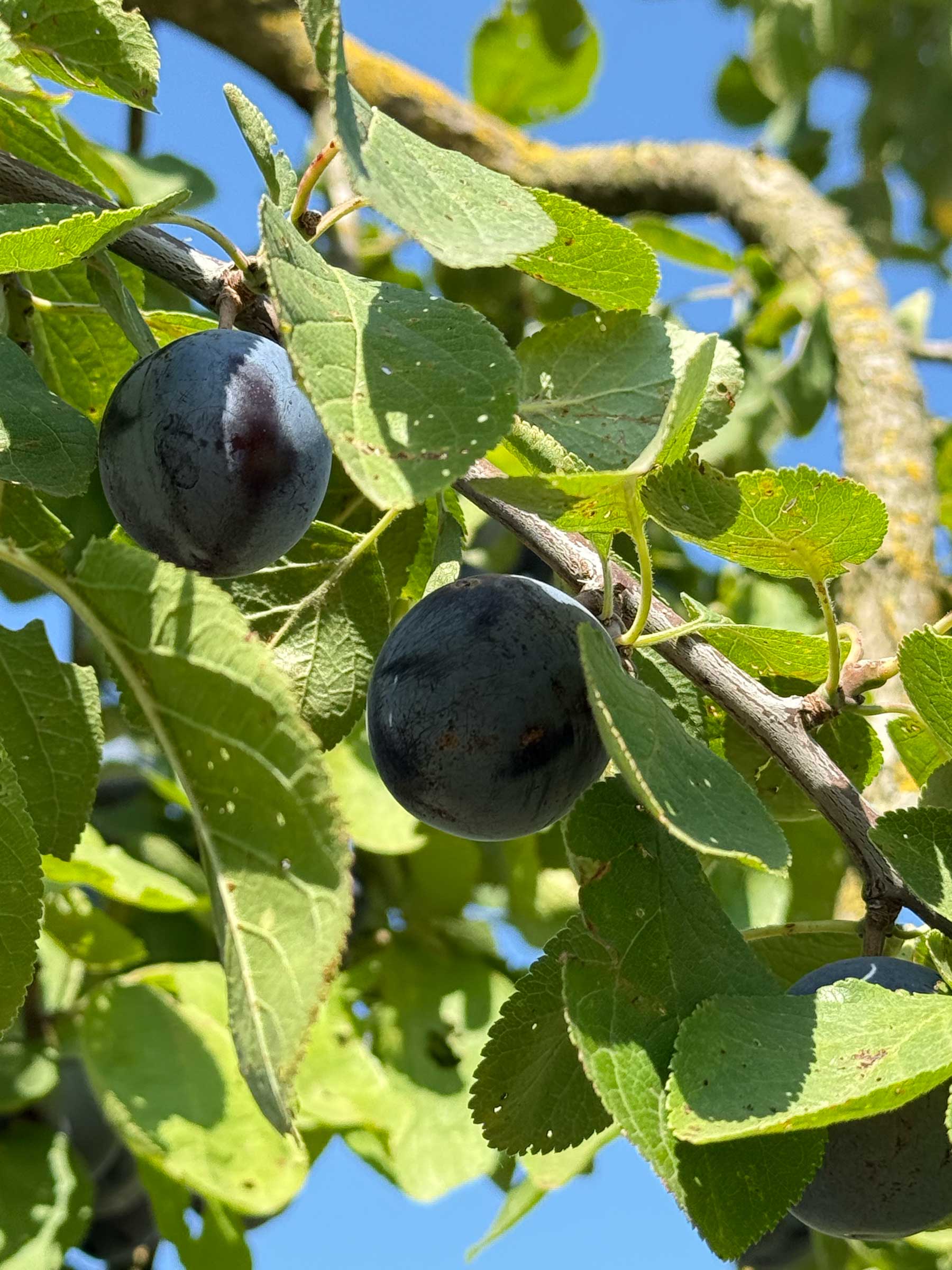
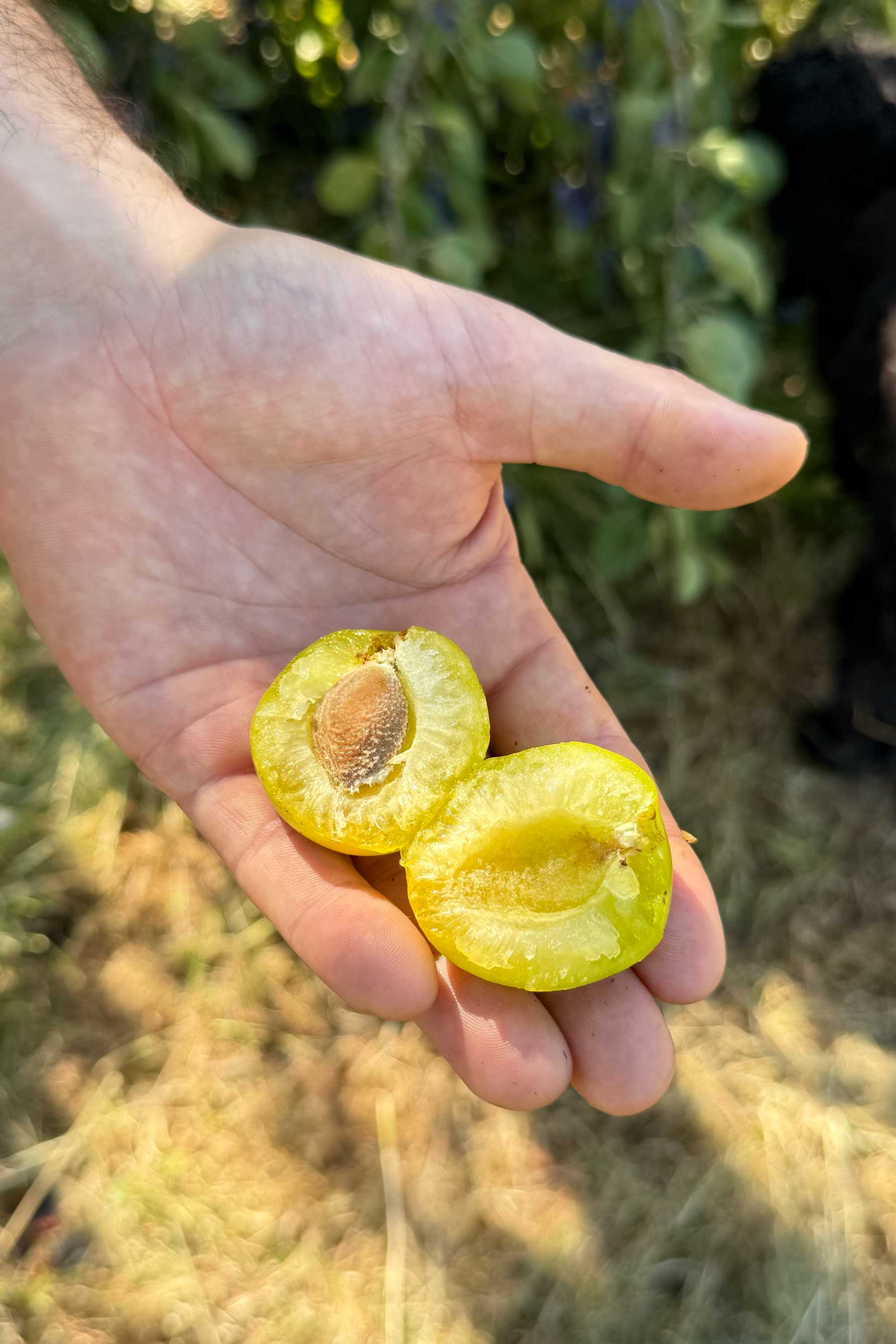
Plum harvesting generally begins around July 25th, followed by apple harvesting in September. Every year, Reinette & Co, our partner in managing the orchard, gets to know it a little better, and that experience is paying off. Their knowledge of the land (just like ours) translates into finer-tuned organization, both for maintenance and for harvesting. And as you may have read in our previous articles on managing our market garden and our livestock over the summer, these past few months have put our resilience to the test. Heat and drought are not anomalies to simply cope with. They are a genuine stress test for the agroecological choices we have been making at Domaine de Graux for years. Our orchards are no exception to this test. Heat waves can have a dual effect on fruit: they speed up ripening, but can also cause fruit to fall to the ground more quickly. We’ll see what this year has in store.
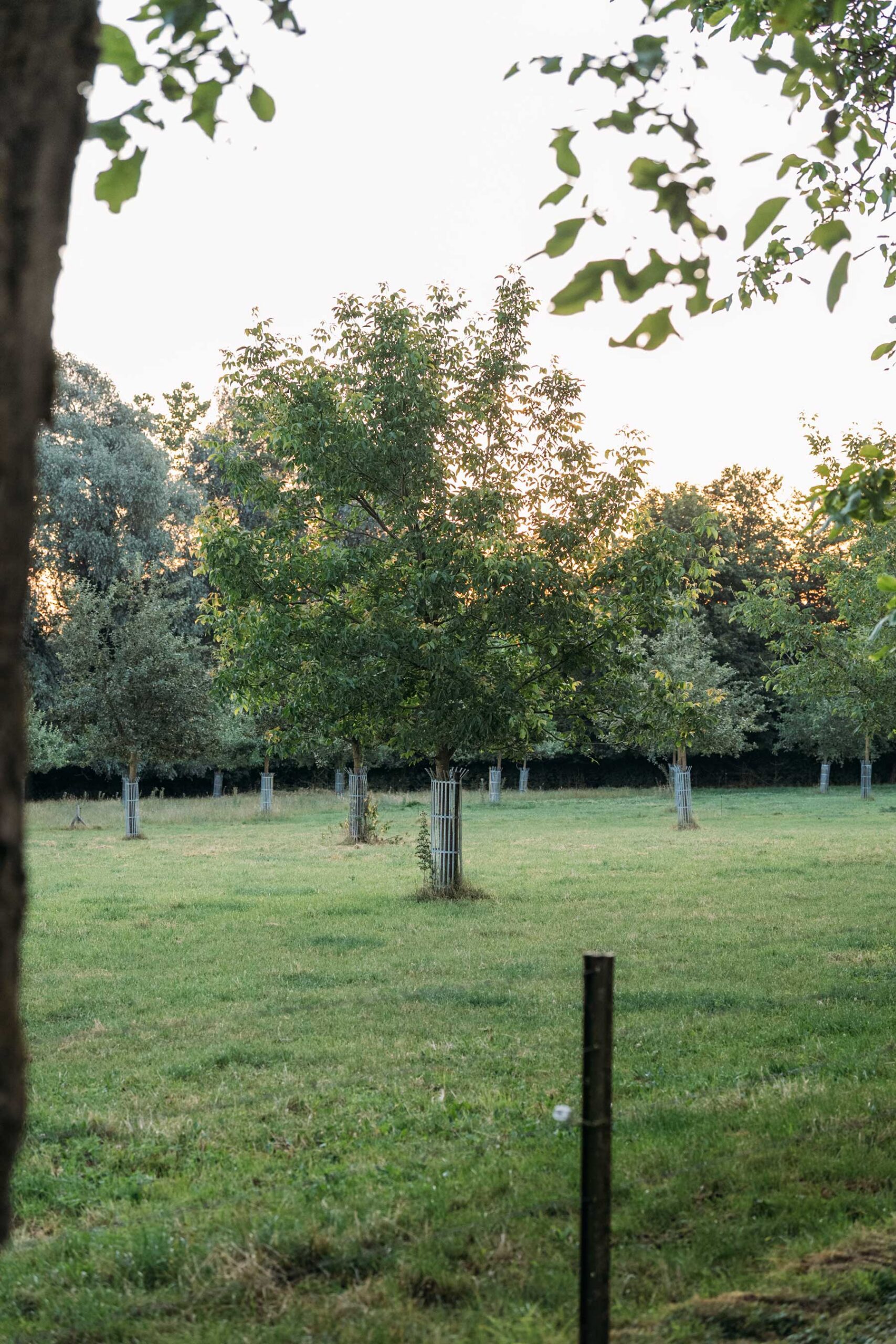
Letting the herd graze among the trees requires careful organization. We work closely with Astrid, our livestock manager, to plan the grazing rotation so as to temporarily avoid harvest areas, allowing both activities to coexist harmoniously.
As we often repeat, agroecological practices don’t focus solely on the harvest in front of us. We want to think of future seasons ahead and ensure the delicate balance between harvest and soil health. Hot, dry conditions create significant stress for the trees, which in turn can reduce production in the following years. Generally speaking, any stress disrupts fruiting: the trees grow more slowly and develop a less extensive root system. The more a tree weakens, the more limited its production becomes. While drought is a source of stress for the trees, excess rain isn’t favorable either. Rain plays a key role in fruit quality, but excess moisture encourages fungal development, a risk heightened by the Domaine’s zero-treatment policy. A wetter year therefore generally results in lower visual quality, with, for example, spots appearing on the skin, without this affecting the fruit’s taste.
This is why the work we carry out in winter and spring matters so much. Pruning ensures healthy, resilient trees by directing their energy where it’s most needed. Cattle grazing in the orchard works on soil balance, enriching and aerating the ground the trees depend on. And our birdhouses provide a welcoming habitat for winged allies, which help keep pests in check. These are positioned to protect them from bad weather, including rain, intense heat, and prevailing winds, a design that has successfully prevented any impact from these conditions.
Making the Most of Remarkably Diverse Orchards
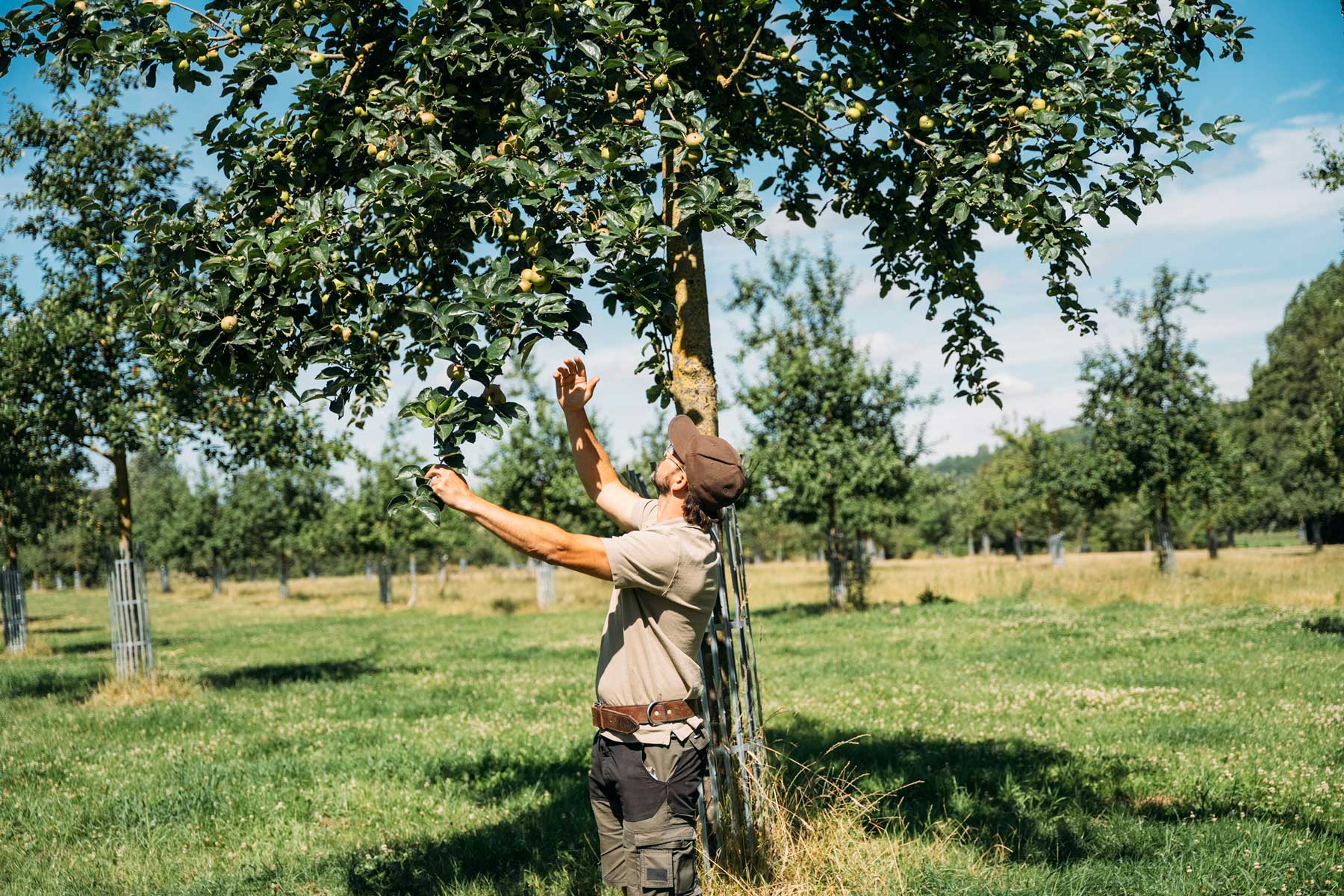
Managing an untreated orchard this rich in diversity comes with many challenges. It requires rigorous organization of the harvest, since not all fruits and varieties (we don’t practice monoculture) follow the same ripening schedule : some ripen early, others later. On top of that, the intended use (jam or juice) determines how and when we harvest. To help us keep the orchard thriving, we rely on a community of local partners: some help maintain the trees, others transform our harvest into finished products.
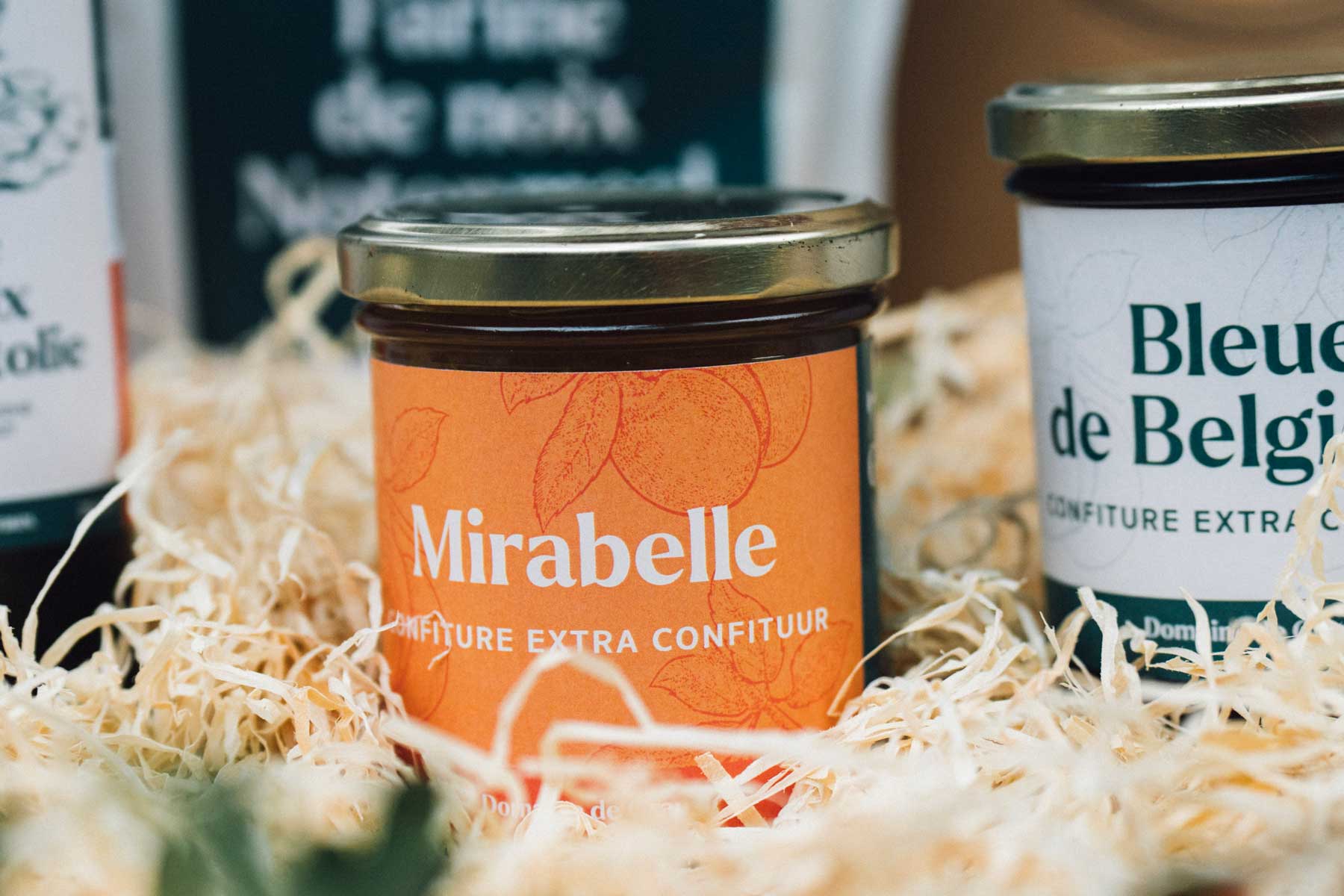
For example, we made the conscious choice to produce single-variety jams from the plums in our orchard, in order to showcase our region’s fruit heritage: Mirabelle, Prune de Prince, Belle de Thuin, Bleue de Belgique, and Reine-Claude.
This same attention to detail carries into how the jams are made. Julien, an artisan known for his brand “Le Bois d’Ogy,” who makes our jams, measures the percentage of natural sugars present in the fruit, which varies from one variety to another and from one harvest to another. Based on this measurement, he adjusts the percentage of added sugar (we use beet sugar) according to what the fruit already offers. This way, each fruit’s natural sweetness and aromatic profile remain at the heart of the jam.
Want to know more about our orchard products?