
Johanna, Impact Coordinator at The Nest, sits down with Nicolas, ornithologist and driving force behind the nest box strategy at Domaine de Graux. He oversees the deployment of a thoughtful network of nest boxes and habitats on the estate, with the aim of sustainably strengthening biodiversity. Nicolas explains why the presence of birds is crucial for ecological balance and natural pest regulation, and shares the main best practices for an effective and future-oriented approach.

How is the presence of birds essential in a conservation orchard and, more broadly, in organic and regenerative agriculture?
Birds are valuable helpers in orchards, capable of reducing pest populations such as caterpillars, codling moths, or aphids by 30 to 50%, thus limiting the need for treatments. They also reflect the health of the ecosystem: an orchard rich in species indicates a living soil, teeming with insects and microfauna. In regenerative agriculture, biodiversity, including birds and pollinators, can increase by 20 to 40% after a few years of favorable practices, such as hedgerows, cover crops, and the absence of pesticides.
Which bird species are the best allies of organic/regenerative agriculture and particularly important for the ecological balance of an orchard?
Among the passerines, tits play a key role by feeding on many pests such as caterpillars, codling moths, and aphids. A nest can consume up to 7,000 insects. Woodpeckers, such as the great spotted woodpecker or the green woodpecker, regulate xylophagous insects and indicate the presence of old trees and rich biodiversity. The robin and the wren, which feed on the ground, contribute to the balance of the litter and soil health. Raptors are also essential: a barn owl can capture up to 2,000 rodents per year, reducing root damage, while the long-eared owl and the common kestrel play a similar role in controlling rodents.
What types of nest boxes are best suited for agroecological orchards and why? How to choose the ideal location to install a nest box to maximize its effectiveness?
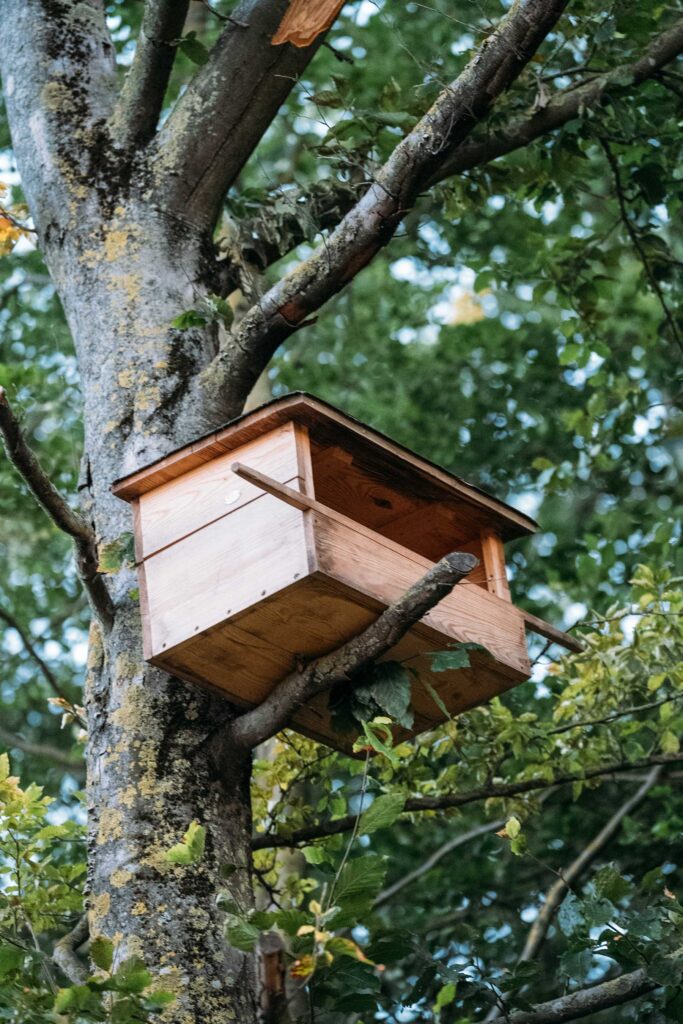
In an agroecological orchard, nest boxes are key tools for natural regulation. The most effective are those intended for tits (hole of 28 to 32 mm), which are major consumers of pests. Semi-open boxes for the robin, the wren, the grey flycatcher, the black redstart, and the white-fronted redstart complement the action, while boxes for raptors (barn owl, little owl, falcon) regulate rodents. To maximize effectiveness, nest boxes should be placed according to rules specific to the target species. Criteria to consider include height, orientation, distance between boxes, the presence of nearby trees or hedges, and…


Pellet and Tawny owl found on the estate
What are the main factors that determine whether a species will actually settle in a nest box? What simple indicators can a farmer observe to know if the nest boxes are effective?
The actual establishment of a species in a nest box depends on a few key factors.
First, the right model is essential: the dimensions and hole diameter must match the targeted species, otherwise the nest box is ignored. The location also plays a major role: height, orientation, silence, and proximity to hedges or trees strongly influence occupancy. Food resources are also decisive: without sufficient insects or rodents, birds will not settle permanently. Finally, longevity matters: many nest boxes are only occupied after 1 or 2 seasons, once birds learn to use them.
To assess effectiveness, a farmer can rely on simple indicators. Frequent round trips of adults in spring indicate reproduction in progress. The presence of droppings under the nest boxes or remains of prey (pellets for owls) is another clear sign of activity. In the medium term, a noticeable reduction in pest damage and a greater diversity of birds in the orchard confirm the system’s effectiveness.

From your experience, how many additional breeding pairs per hectare can be expected thanks to installing these nest boxes?
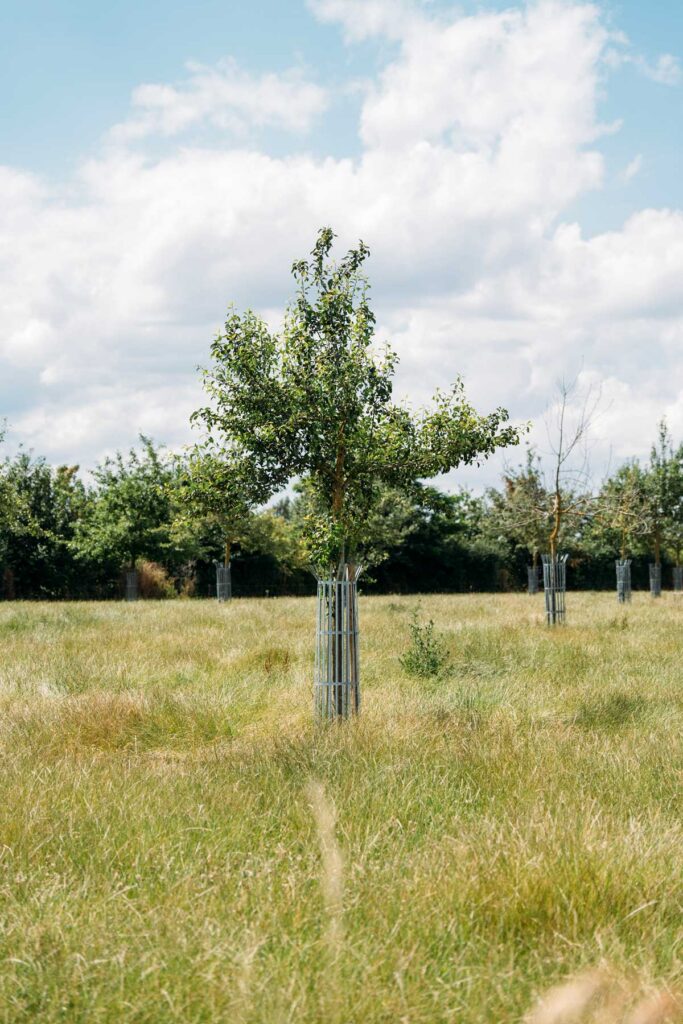
In an agroecological orchard, installing nest boxes generally allows for 2 to 5 additional breeding pairs (mainly tits) per hectare per year, depending on the site configuration. In a habitat-poor orchard with few hedges and mature trees, you can expect 3 to 5 pairs per hectare after two to three seasons. If the orchard is already structured (with hedges and flowering strips), the increase will be more modest. Boxes for owls have a smaller numerical impact (one box can serve several hectares), but their effect on rodent regulation remains very important.
Overall, a well-designed nest box network can increase the density of breeding birds by 30 to 60% per hectare, with a direct impact on natural pest regulation.
From what number of annual observations can we consider that a species is really established and not just passing through?
To be able to determine that, several repeated indicators across the breeding season should be observed. In practice, a species is considered established if it is regularly observed on at least 5 to 10 days spread between spring and early summer, with visible nesting behaviors such as carrying nesting material, feeding chicks, or frequent trips to the nest box. Other indicators include the presence of droppings under the nest box, owl pellets, or visible juveniles in the box. If observations are limited to a few isolated visits or singing alone, the species is likely just passing through and has not yet colonized the site.
What specific features of Domaine de Graux influence its capacity to host birds and the relevance of a nest box network?
Domaine de Graux features several characteristics that increase the capacity to host birds and strengthen the effectiveness of a nest box network. The mosaic of habitats, including orchards, hedges, meadows, wetlands, and copses, offers varied habitats and abundant food resources for different species, which promotes nesting and lasting presence. The absence of pesticides guarantees a high density of insects and larvae, the main foods of insectivorous birds, making the nest boxes more attractive and functional. Regenerative grazing contributes to plant diversity and soil structure, creating micro-habitats for insects and small vertebrates, while keeping open meadows for surface-dwelling birds and predators of rodents. Taken together, these practices create a rich and stable ecosystem, where nest boxes are more likely to be occupied and to provide a real service of natural pest regulation.


What risks or limits should be considered when promoting certain species (for example, competition among birds, unwanted predation)?
When promoting certain species in an orchard, several risks or limits must be considered, such as interspecific competition. The risk of local ecological imbalance exists if one species is overly favored. At Domaine de Graux, these aspects will be carefully considered: nest box types and their distribution will be diversified and habitats maintained varied and balanced.
How do you see the future role of avifauna in agricultural systems in the face of climate change? And what are the main climate-change impacts on the key species mentioned above?
The role of birds in agricultural systems should become even more important with climate change, as they naturally regulate pests and help crops stay resilient under more variable conditions. However, some key species are affected: tits can become desynchronised with the emergence of insects, owls and rodent predators are sensitive to changes in prey availability, and robins or wrens may suffer from droughts or prairie disturbances. Maintaining diverse habitats, hedges, flowering strips, and refuge zones remains essential to allow birds to continue fulfilling their ecological role despite these changes.
What innovations or recent discoveries excite you or seem promising to strengthen the role of birds in agroecology?
Developing landscape-scale nest-box networks, combined with hedges, flowering strips, and permanent meadows, significantly improves the long-term establishment of species. Simple monitoring tools, such as automated listening stations or standardized observation, provide scientifically verifiable results of the measures’ effectiveness. Growing interest in agroforestry and regenerative grazing is very motivating. Indeed, these practices help create more stable habitats in the face of climate change. These approaches align with an agriculture where birds are not only protected but fully integrated as functional actors in the balance of agricultural systems.
Beyond birds, which other animal species play a key role in organic and regenerative agriculture, and what practices help encourage them?
Pollinators such as (wild) bees, bumblebees, and butterflies ensure pollination, while ladybirds, hoverflies, or lacewings regulate pests. Earthworms improve soil and fertility, and small mammal predators, like hedgehogs and bats, help control insects and rodents. To encourage them, maintain hedges, copses, and flowering strips; diversify crops; limit pesticides; and practice regenerative grazing or composting. These measures foster an balanced ecosystem where biodiversity naturally supports the health and productivity of crops.
