The warmer days are here, and you can feel it throughout Domaine de Graux. The herds are slowly making their way back to the meadows after a winter under shelter, the market garden is in full swing, and the Domain is gently coming back to life. A beautiful time of year is unfolding.
At the Heart of the Market Garden
Spring is the season for romanesco, mesclun, and radishes. We also plant smaller quantities of fennel, aubergines, peppers, beans, lettuces, kohlrabi, Swiss chard, and spring onions in order to grow them during the summer.
The soil improves year after year, and it shows. Compared to the newly extended growing area, where the soil is still compacted, the older section of the market garden displays noticeably better quality, a clear sign that soil structure, porosity and biological activity improve with time.
To prepare the beds while preserving soil life, the method remains the same. We wait until the soil has drained well after winter, then run the broad fork to loosen the earth without turning it. Compost is added to feed the micro-organisms, lighten the texture and improve water retention, finishing with a light pass of the rotary harrow over the top few centimeters.


With the Ice Saints in mind, we stay cautious. The first tender seedlings move into the greenhouse in early April, and outdoor planting waits until mid-spring. Frost fleece is kept on hand in case of a cold snap — the p19 fleece* gains a few degrees and reduces wind impact, though it does require extra work: hoops must be installed first, the fleece laid over them, and ballast bags placed along the edges to stop it lifting or shifting. From March–April onwards, hardy varieties go straight into ground.
Summer vegetables — tomatoes and cucumbers in the greenhouse, zucchinis outside — wait until 15 May.
*Weight per m²: 19 g/m²
Meadow Care and Preparation
Before letting the cows back onto the prairies, Astrid, working alongside André’s team, takes the time to walk the fences and meadows to check that everything is in order after winter. It is also the right moment to bring out the horticultural equipment and get the pastures ready for spring: the team harrows the plots and levels the fields, particularly where moles have pushed up uneven ground. These irregularities can be dangerous for farm machinery and for the animals’ legs, and they hinder healthy grass growth. Work done well now means denser, more nutritious grass for the whole year ahead.

The Return to Pasture
The return is gradual and gentle, before the rotation cycle finds its natural rhythm again.
Galloping, resting under the fruit trees, rediscovering natural behaviors — coming back to the pasture is one of those moments that makes all the hard work of winter worthwhile. Astrid continues to take the time to greet each animal individually, observing their habits and noting their little quirks. A bond that deepens, season after season.
Between winter and spring, the cows’ bodies go through a real transition. Fresh grass brings a surge of new energy, and the body needs time to adjust.
Astrid loves preparing her own natural blends — to support immunity, aid digestion and ease seasonal transitions. She sets out several buckets across the meadow, each with a different recipe — combinations of minerals, trace elements and dried herbs chosen for what seems most useful at this time of year. Then she simply watches. She prepares these herself to track the cows’ metabolic cues and identify their most pressing health needs.

The Final Orchard Pruning
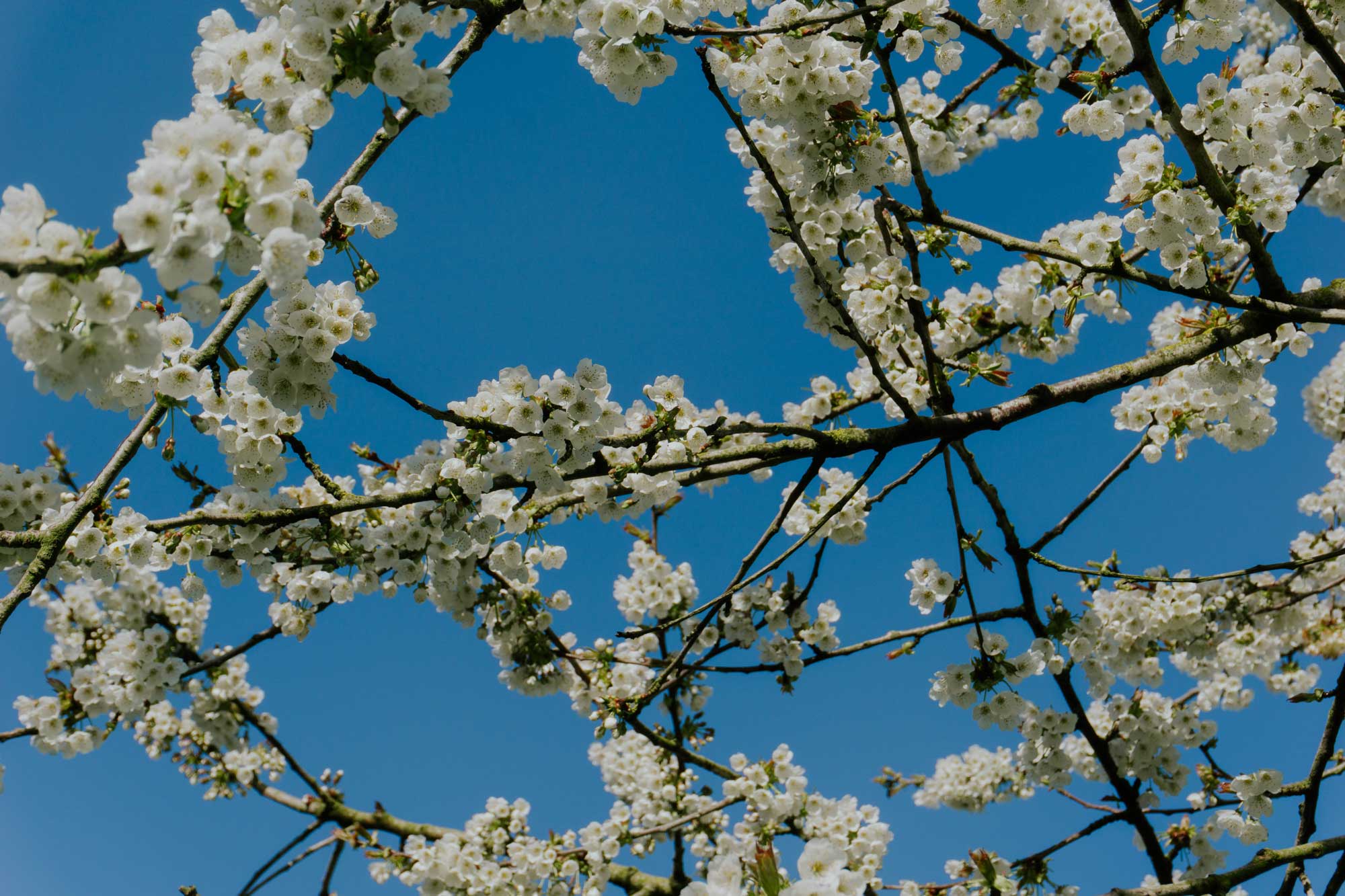
Spring announces itself as early as March, and in the orchard, sap is rising and buds are forming. The first blossoms of the plum and cherry trees have already revealed their beauty in the orchard.
Late February to early March is the very last window to prune the apple and pear trees before they break dormancy.
Here, pruning follows the central leader method. In short, once the tree is established, a light pruning guides it towards a more natural shape, optimizing fruit production while respecting its natural growth. Caring for tree health ensures good air circulation and light penetration.
The protective guards around the trunks are also checked: are they wide enough? Are they damaging the bark? Do they still offer sufficient resistance against the Angus cattle?
The base around each tree is then weeded, and a full walk of the orchard assesses the overall health of the trees. And we hope the frosts don’t arrive too late in the season.
At the end of winter, we also installed new nest boxes and repaired those in need of a little maintenance.


Wildlife Conservation

To protect and encourage wildlife (insects and pollinators included), several habitat improvements have been made across our biotope: pond management, the creation of grass buffer strips within cultivated areas, and the planting of hedgerows. These spaces provide food sources and shelter for local wildlife. While their full benefits unfold over the long term, they are already contributing to the biodiversity of our ecosystem.
According to the State of the Walloon Environment, nearly 40% of habitat types in the Walloon Region are already showing a trend towards improvement. Our various initiatives contribute directly to this progress by supporting biodiversity and ecosystem quality.
Amaury and Claude, the domain’s gamekeepers, carry out regular wildlife monitoring, estimating animal populations relative to the total land area. This allows them to track how wildlife is evolving across the entire estate.
Spring is the liveliest season — the time for mating, nesting, births and hatching. Animals are far more active than in winter, drawn out by the return of food. Births take place from March to May, with fawns arriving a little later, around mid-May. We also begin to see male hares boxing, pheasants displaying, and the first ducklings hatching.
This year, their behavior is much the same as last year, except that they are moving further away from areas of activity in search of quiet.
These observations confirm the positive effects of agroecology on wildlife — an approach that places biodiversity at the heart of how the domain is managed.
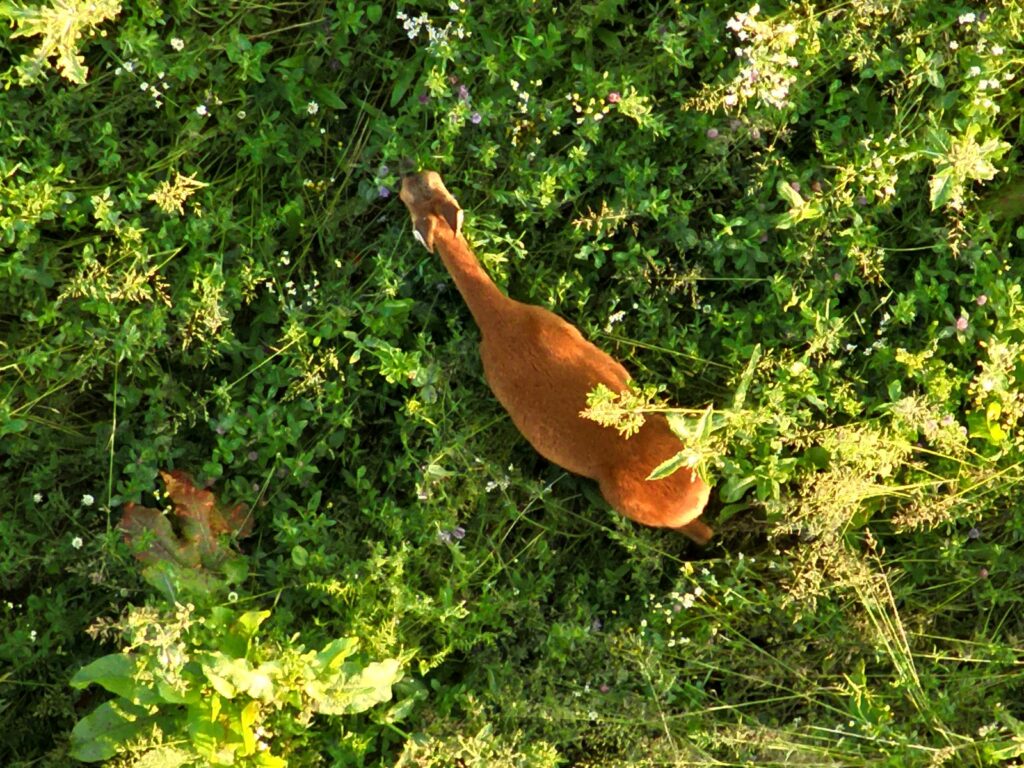
In 2024, we were able to save a doe and a roebuck during mowing time, which is particularly critical for young animals, with the help of the association Sauvons Bambi Belgique. These nature enthusiasts volunteer their services to farmers and local authorities. Using a drone fitted with a thermal camera, they are able to locate deer and ground-nesting birds. Thanks to their volunteer pilots, the association saved 834 fawns across Belgium in 2023. At Domaine de Graux, this intervention will be repeated before every mowing season.

Estate Maintenance
Every year, the ritual is the same. At this time of year, André and his team take charge of maintaining the domain.
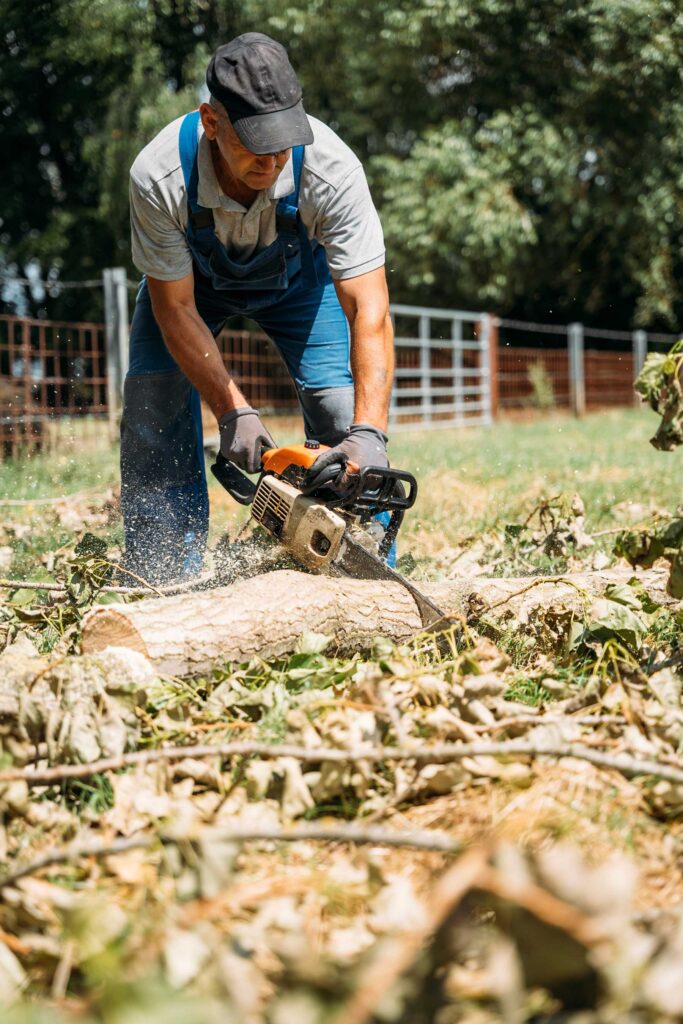
One of the key tasks is a careful inspection of the trees. Those that have not survived the winter are felled freeing up light for neighboring trees. Nothing goes to waste. The branches are then fed through the chipper and turned into wood chips, used either in the market garden or across the fields.
The paths are also inspected after winter. Any potholes are identified and filled as they are found. The buildings are not forgotten either — cornices, roof tiles, accumulated leaves — everything is checked so we can start the new season on solid footing.
Finally, the ponds are inspected to prevent any blockages, and the ditches are cleared